
For us, hair is love
We enter treatment through deep science, we love what we do without limit, and we do everything to make our clinic a calm and pleasant place for patients.
We enter treatment through science
Hair says more about a person than the mirror shows. A change in density, colour or structure can be the first sign of what is happening inside: in the endocrine system, in metabolism, sometimes in mental health. So we do not start with a procedure. First we ask why, and we look for the answer in science, not in fashion.
Here, you could say, this science was built by our founder, Professor Yulia S. Ovcharenko. Over 20 years in trichology, a thesis on alopecia areata, books doctors learn from today, the Ukrainian Hair Research Society, the Alopecia School. Everything we do at an appointment grew out of this work.
Seven principles we work by
-

First the cause, then the treatment
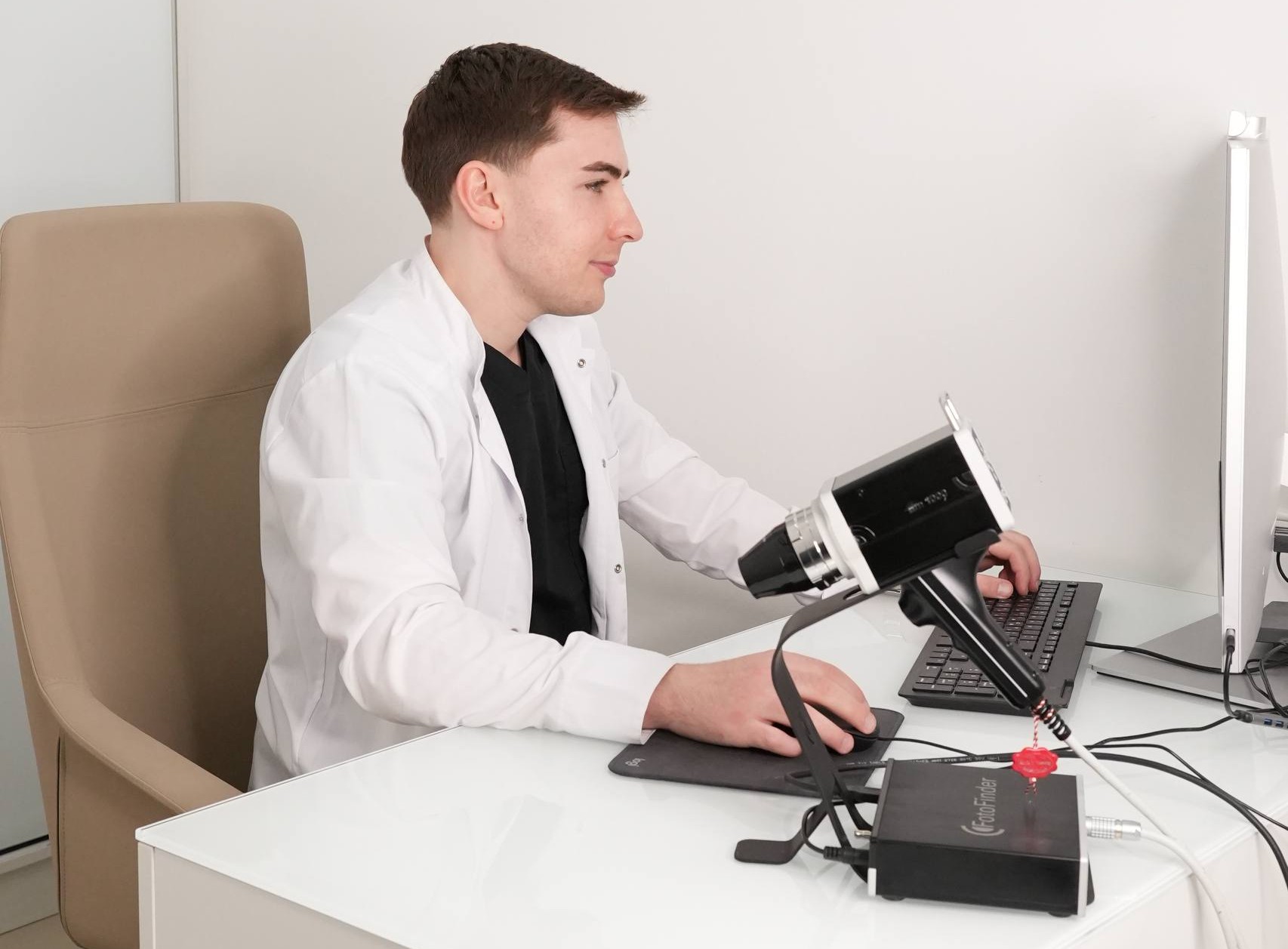
The same symptom can have different causes, so different people need different treatment. Diagnosis starts with an examination and trichoscopy, with laboratory tests added when needed. The doctor draws up an individual programme after analysing these results.
What trichoscopy is -

The person matters more than the symptom
A trichologist is often the first doctor a person sees with this complaint, and can spot in time a problem that lies beyond the hair. So the doctor looks further than the scalp, at general health and related conditions, and works with doctors of related specialties when needed.
Clinical trichology -

One team around the patient
Before a hair transplant, surgeons, trichologists and aestheticians discuss the desired result and what is possible together. The surgical and therapeutic teams work jointly at every stage: during preparation, during surgery and in follow-up, to preserve the transplanted hair.
Hair transplantation -

Science every day, not on a shelf
Our doctors do more than read research. They write the books others learn from: Trichology. A Practical Guide (2025) and clinical guidelines on alopecia areata (2026). At an appointment this means a decision rests on current evidence, not on fashion or advertising.
Our literature -
Knowledge should work beyond our own clinic
We train doctors in Ukraine and other countries, initiated the Ukrainian Hair Research Society (UHRS) and the Alopecia School, and co-founded the Eastern European and Asian Hair Research Society (EEAHRS). The more doctors can recognise hair diseases, the sooner patients get help.
Training for doctors -

Honest about what is possible, discreet about what is personal
Many procedures are heavily advertised, so we first help you work out what you really need and what result can be achieved. The decision to have a hair transplant is often not an easy one, so consultations take place in private, and a stay at the clinic is arranged with confidentiality in mind.
-
This should be a calm and pleasant place
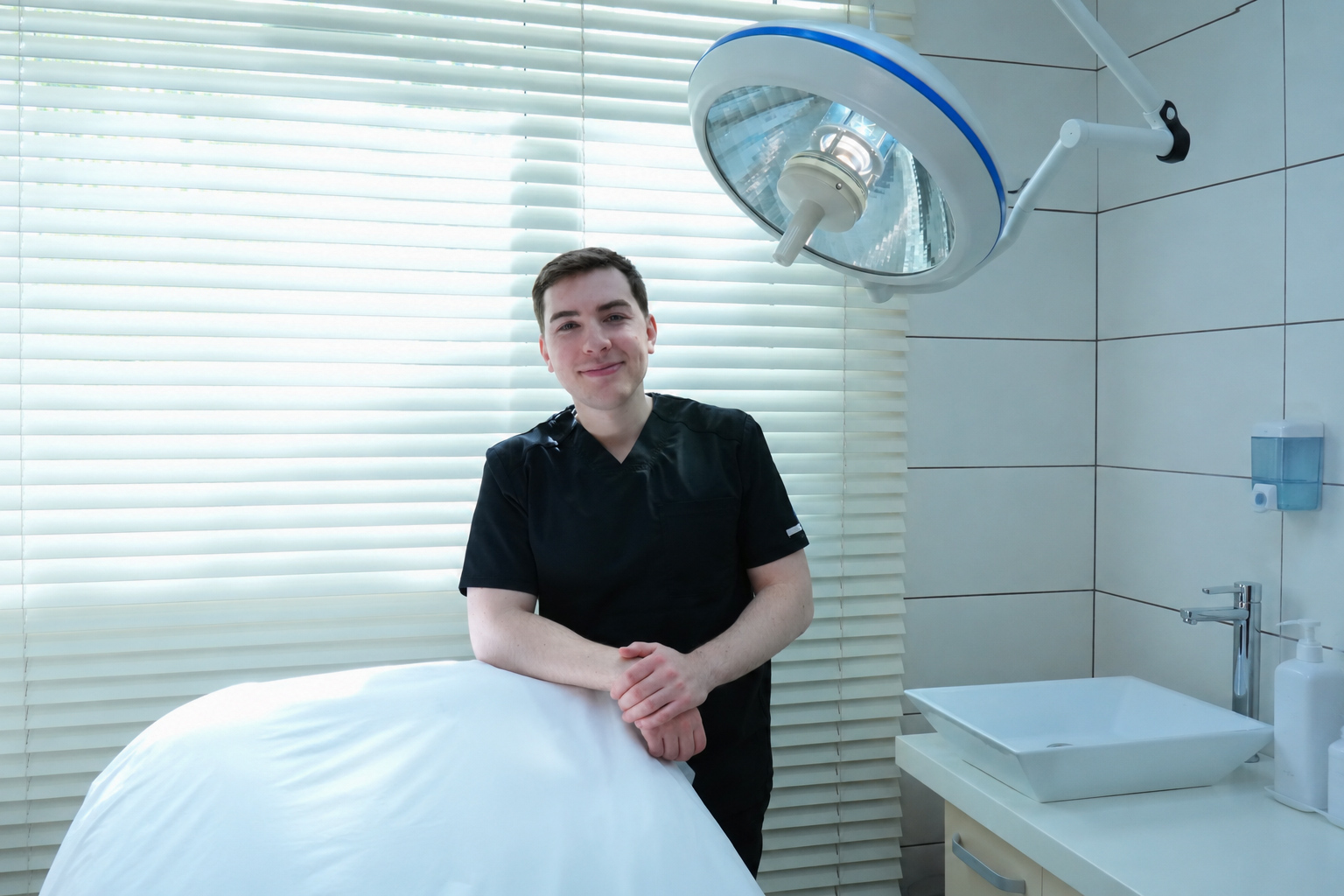
Coming in with a hair problem is rarely easy, so we aim to create an environment where you feel comfortable from the first call. The clinic is in a quiet part of the city centre, our administrator will help you choose a doctor and a convenient time, and our team speaks Ukrainian, Russian and English. During a transplant you can watch a film or listen to music, with breaks for rest and lunch, and afterwards a personal assistant stays with you for a year.
We defend hair down to the last follicle
To some, hair is a detail you only notice in the mirror. To us it is a life's work and a boundless love. We love every difficult diagnosis, every graft, every new piece of research and every person who has finally decided to talk about it. And we will not rest while there is still a chance to save what can be saved.
Four directions, one purpose
Treatment
Diseases of the hair, scalp, skin and nails in adults and children.
Transplantation
A specialised clinic: over 15 years of experience, strip and seamless methods.
Research
Scientific publications, our own clinical guidelines, the international GRASS consensus.
Education
Courses for doctors, the Alopecia School, the Trichology Consilium platform.
What stands behind these words
- 20+years working in trichology
- 3000+new patients a year
- 300+students in Ukraine and other countries
- 90+educational events in 10 years

Yulia S. Ovcharenko
Founder and head of the clinical, educational and research centre Trichology Institute
- Professor, Department of General and Clinical Immunology and Allergology, V. N. Karazin Kharkiv National University
- President of the Ukrainian Hair Research Society (UHRS)
- Vice President of the Eastern European and Asian Hair Research Society (EEAHRS)
How it began
- 2003Doctoral thesis on a differentiated approach to treating alopecia areata
- 2009The Trichology Institute is founded
- 2014Joins the board of the European Hair Research Society (until 2017)
- 2017The Alopecia School in Ukraine
- 2019Co-founding of the Eastern European and Asian Hair Research Society
- 2025The book Trichology. A Practical Guide
- 2026Clinical guidelines on managing patients with alopecia areata
Titles matter. But our team's greatest strength is something else: love for the profession and genuine empathy for patients.
Let's start with a conversation
Tell us what is troubling you. Our administrator will help you choose a doctor and a convenient time.
17 Danylevskoho St, Kharkiv