
Surgical Removal of Skin Lesions
Surgical removal of skin lesions is an operation aimed at removing a suspicious or malignant lesion completely, following the principles of evidence-based medicine and preserving as much healthy surrounding tissue as possible.
The method is used to treat benign, precancerous and malignant skin lesions according to the established diagnosis, the clinical indications and the results of the preliminary examination.
During the operation the doctor excises the lesion within defined surgical margins. The extent of the operation depends on the histological type of the lesion, its size, depth of invasion, location and the risk of local recurrence.
Particular attention is paid to planning the surgical margins correctly, controlling the depth of removal and sending the removed tissue for histopathology. For malignant lesions, histology shows whether the removal was complete and whether further treatment is needed.
The operation is done under local anesthesia or another type of anesthesia, depending on its complexity and extent.
Depending on the size of the defect and the anatomy of the area, the final step is either primary closure of the wound or reconstructive techniques that restore the skin.
Complexity levels of surgical removal
Complexity level I
Surgical removal of small skin lesions in a relatively simple anatomical location that need no complex reconstruction.
The abnormal tissue is excised and the wound, where possible, is closed with a linear suture.
Complexity level II
Surgical removal of medium-sized skin lesions that need a larger excision, more careful planning of the margins and a more complex closure of the wound.
The operation takes into account how the lesion relates to the surrounding tissue and the need for the best functional and cosmetic result.
Complexity level III
Surgical removal of large, deep or structurally complex lesions that needs an extensive excision and thorough planning of the operation.
Such operations can leave significant defects that call for special reconstruction techniques to restore the anatomical integrity of the tissue.
Make an appointment
Surgical removal in anatomically complex areas
Anatomically complex areas include the face, nose, eyelids, lips, ears, neck, hands and other locations where surgery has to be especially precise: important structures are close, there is little spare tissue and the cosmetic demands are high.
Complexity level I in anatomically complex areas
Surgical removal of small lesions in delicate anatomical areas, which needs precise planning of the incision, control over the excision and careful handling of the surrounding structures.
Complexity level II in anatomically complex areas
Removal of medium-sized lesions or lesions in an unfavourable location, which needs more complex planning of the surgical access, control of the margins and attention to the functional and cosmetic features of the area.
Complexity level III in anatomically complex areas
Surgical removal of large, deep or awkwardly located lesions in functionally and cosmetically important areas. Such operations may need a wider excision, complex reconstructive solutions and additional surgical techniques to preserve the function and anatomical integrity of the area.
Scientific basis
- S2k Guideline Basal Cell Carcinoma of the Skin (2023), principles of complete surgical removal of basal cell carcinoma and histological margin control
- American Academy of Dermatology: Cutaneous Squamous Cell Carcinoma Guideline, recommendations on the surgical treatment of squamous cell carcinoma of the skin
- National Cancer Institute: Skin Cancer Treatment PDQ, surgical treatment and control of resection margins
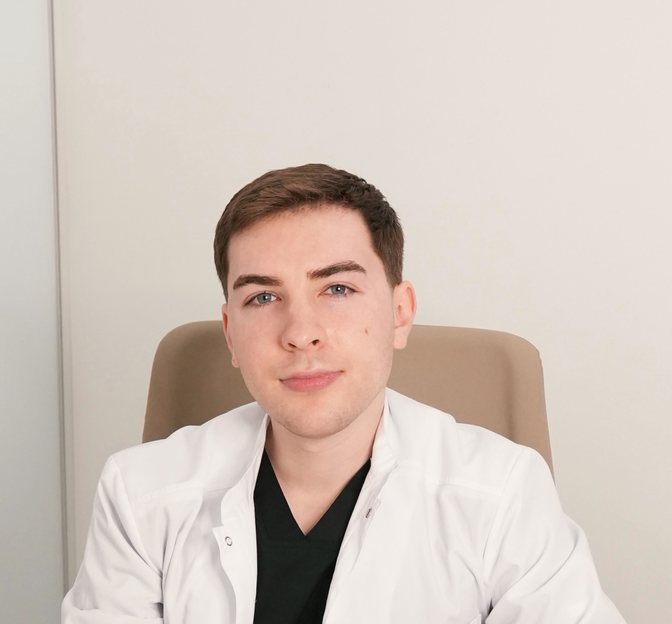
Doctors
Prices
| Surgical removal of skin lesions, complexity level I | 3500 UAH |
| Surgical removal of skin lesions, complexity level II | 5000 UAH |
| Surgical removal of skin lesions, complexity level III | 7000 UAH |
| Surgical removal of skin lesions, complexity level I, in anatomically complex areas | 5000 UAH |
| Surgical removal of skin lesions, complexity level II, in anatomically complex areas | 7000 UAH |
| Surgical removal of skin lesions, complexity level III, in anatomically complex areas | 9000 UAH |
Frequently Asked Questions
When a suspicious or malignant lesion has to be removed completely. The method is also used for benign and precancerous skin lesions, according to the diagnosis, the clinical indications and the results of the preliminary examination.
The level depends on the size, depth and complexity of the lesion and on how the wound is closed. Level I: small lesions in a relatively simple location, the wound is closed with a linear suture where possible. Level II: medium-sized lesions, a larger excision and a more complex closure. Level III: large, deep or structurally complex lesions that may need special reconstruction techniques afterwards.
The face, nose, eyelids, lips, ears, neck, hands and other areas where important structures are close, spare tissue is limited and cosmetic demands are high. Surgery there has to be especially precise, so these areas have their own complexity levels and prices.
Local anesthesia or another type of anesthesia, depending on the complexity and extent of the operation.
Yes, it is sent for histopathology. For malignant lesions this shows whether the tumour was removed completely and whether further treatment is needed.
Depending on the size of the defect and the anatomy of the area: with primary closure or with oncological reconstruction techniques.
