
Radiofrequency Removal of Skin Lesions
Radiofrequency (radio-wave) removal is a minimally invasive electrosurgical method: high-frequency electrical energy is used to cut, ablate or coagulate tissue in a controlled way.
During the procedure a special electrode acts locally on the tissue of the lesion. Depending on the device mode, the abnormal tissue is destroyed in a controlled way or removed layer by layer, while small vessels are coagulated at the same time.
The method allows precise, targeted work, control over the extent of the intervention and less bleeding during the procedure. This makes it suitable for removing various benign skin lesions, taking into account their structure, size and location.
Which lesions are removed with radiofrequency
Radiofrequency removal can be used for seborrheic keratoses, certain vascular lesions, papillomatous growths and other clinically confirmed benign skin lesions.
Make an appointment
How the procedure is done
Before the procedure the doctor carries out a clinical examination and dermoscopy, determines the nature of the lesion and chooses the most suitable method.
The procedure is done under local or topical anesthesia, depending on the nature, size and location of the lesion. For small superficial lesions, a topical anesthetic may be enough.
Healing and result
Afterwards a small wound remains and gradually forms a scab. Primary healing usually takes 7-14 days, but the skin may take longer to regain its final colour and texture.
The method allows minimally invasive work with controlled action on the tissue and a good cosmetic result. The final result still depends on how deep the removal goes, where the lesion is and how the skin heals in each person.
Radiofrequency removal and histology
Radiofrequency energy changes tissue through heat. When histopathology is needed, the removal method has to provide preserved, undamaged tissue that can still be assessed.
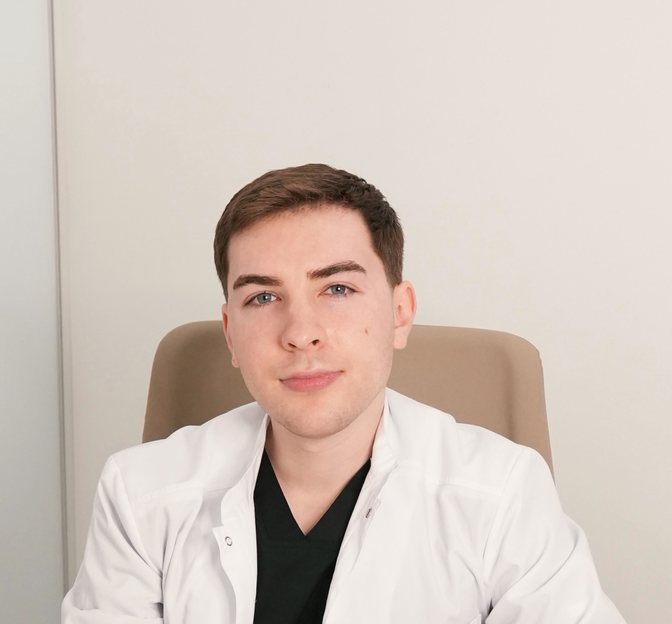
Doctors
Prices
| Radio-wave removal of benign skin lesions (keratomas / angiomas) on the face, 1 zone | 3000 UAH |
| Radio-wave removal of benign skin lesions (keratomas / angiomas) on the trunk / limbs (1 zone) | 2500 UAH |
| Radio-wave papilloma removal, per lesion | 350 UAH |
| Radio-wave papilloma removal on the eyelids, per lesion | 500 UAH |
| Radio-wave papilloma removal on the eyelids (package) | 3000 UAH |
| Radio-wave papilloma removal, 1 zone (package) | 2000 UAH |
| Radio-wave removal of genital warts in anatomically complex areas, per lesion | 600 UAH |
| Radio-wave removal of genital warts in anatomically complex areas (1 zone) | 3500 UAH |
| Radio-wave removal of seborrheic keratomas / angiomas, per lesion | 600 UAH |
| Radio-wave removal of seborrheic keratomas / angiomas, each further lesion from the 2nd | 400 UAH |
| Radio-wave removal of seborrheic keratomas / angiomas (1 zone) | 3000 UAH |
Frequently Asked Questions
A special electrode delivers high-frequency electrical energy to the tissue of the lesion. Depending on the device mode, the tissue is destroyed in a controlled way or removed layer by layer, and small vessels are coagulated at once, so there is less bleeding.
Seborrheic keratoses, certain vascular lesions (angiomas), papillomatous growths and other clinically confirmed benign skin lesions, including genital warts.
The procedure is done under local or topical anesthesia, depending on the nature, size and location of the lesion. For small superficial lesions a topical anesthetic may be enough.
The small wound gradually forms a scab. Primary healing usually takes 7-14 days, and the final colour and texture of the skin may take longer. The result depends on the depth of removal, the location and how each person heals.
Radiofrequency energy alters tissue through heat. When histopathology is needed, a method that keeps the tissue intact is chosen, for example shave removal or an excisional biopsy.
The doctor, after a clinical examination and dermoscopy at a dermato-oncologist consultation, determines the nature of the lesion and chooses the most suitable method.
